
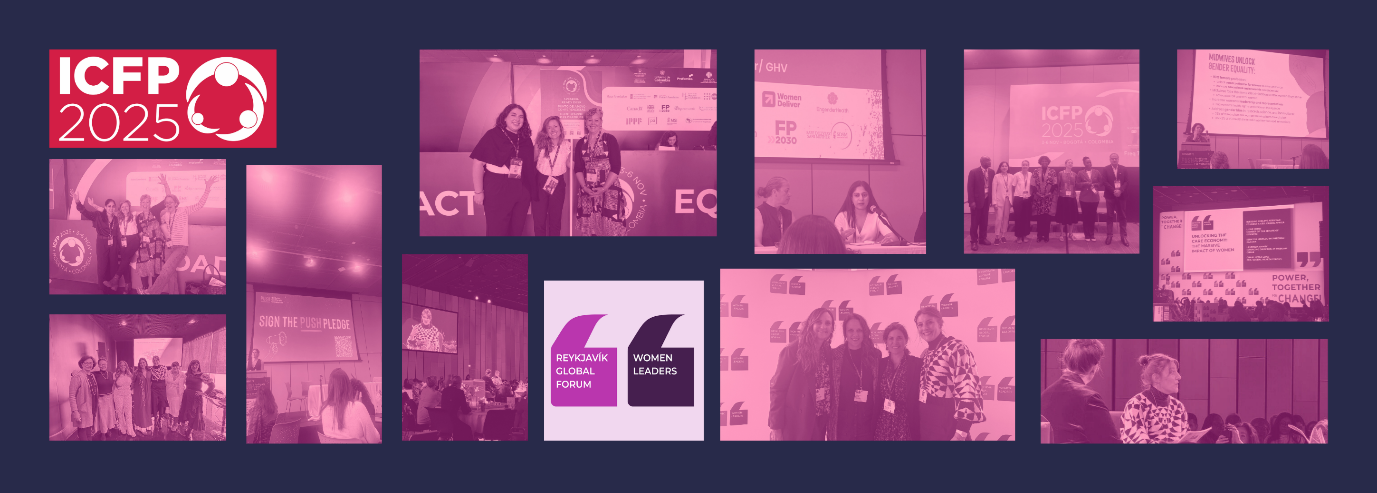
The global landscape for health, rights, and democracy is evolving faster than ever. As funding priorities shift, social movements intensify, and emerging crises reshape the way we perceive this era, it's leading us to a pivotal crossroads. However, despite the uncertainty, our recent participation in the International Conference on Family Planning (ICFP) and the Reykjavik Global Forum (RGF) left us energized and optimistic. These convenings illuminated not just the challenges but exciting opportunities and solutions ahead for advancing sexual and reproductive health and rights (SRHR), locally led development, and women’s leadership around the world.
We felt the energy, the inspiration, the hope, and a sense of community and urgent, united action at these events. We conversed with inspiring global leaders, community activists, experts, advocates, innovators and many more – all united to advancing equity, leadership, and systemic change with a focus on inclusivity and women's empowerment. We reflected on these conversations from these landmark events and share a few key learnings.
One of the clearest signals across both forums was the large shift in donor funding this year. Major traditional donors, such as USAID, have been dismantled or restructured, redirecting support away from large U.S.-based non-governmental organizations, and local, regional organizations—with particularly pronounced activity in Africa, Latin America, and Europe. The approach moves away from NGO-dominated delivery and traditional donor aid structures toward domestic resourcing, government-to-government partnerships, private sector engagement, innovative financing approaches, and expanded faith-based implementation. This transition, while uncertain, presents a vital opportunity to strengthen partnerships with grassroots organizations driving change on the ground.
Localization is no longer an optional strategy—it’s an imperative. Countries and communities are increasingly reclaiming ownership of their health systems through health sovereignty efforts, accelerated by the withdrawal of longstanding donors. By supporting rights-based approaches and supporting local groups, we are keen and focused on ensuring thoughtful engagement with our partners.
The family planning field is widening its lens. ICFP reflected a growing embrace of comprehensive sexual and reproductive health and rights. Youth engagement, grassroots activism, and social movements, such as Argentina’s Green Wave demonstrate the power of energetic, community-driven change. Additional dialogues raised family planning and SRHR as an intersectional issue that cuts across health and climate, including its importance in disaster-affected communities.
These developments underscore the importance of framing family planning not just as a health intervention, but as a crucial social and economic investment—one that fuels development, empowers individuals, and strengthens communities. Tools like the Family Planning Impact Investment Calculator reveal the tangible returns on investment in domestic resource mobilization.
A strong focus at ICFP was on evidence and innovation—how data and measurement can drive smarter decisions and more impactful interventions. Social norms and behavior change emerged as recurring themes, leveraging existing platforms, new digital tools, and local media to reach youth effectively. Yet, gaps remain, especially around mental health integration and the vital role of midwives and frontline workers.
The integration of maternal, newborn, and child health with family planning demands more intentional, practical approaches—an area calling for greater policy-maker engagement and clearer operational guidance. While this is not a “new” theme per se, there was a renewed sense of commitment and action at the conference.
At RGF, the stark rise of anti-rights movements dominated conversations, highlighting coordinated efforts threatening gender equality, democracy, and human rights worldwide. While also resonate at ICFP, there was a strong focus on the impact on reproductive rights, but with a recognition of the broader linkages to democratic systems and gender equality. These challenges are formidable, but so too is the resolve to resist them through cross-sector coalition-building and strategic alignment.
By playing a critical role as a connecter, we see this as a critical time to link voices from reproductive rights to democracy and peace sectors. Collaboration, shared purpose, and unified messaging across diverse movements are powerful tools in countering misinformation and political attacks.
Women’s leadership, especially at the local level, emerged as another vital theme. The battle is never won only at election day; sustained mentorship, resources, and support are necessary to ensure women leaders thrive and transform their communities.
Through both our conversations and recent partner data, the evidence is clear: had, it became evident that shifting cultural dynamics and evolving gender norms continue to influence perceptions of women’s leadership and rights. Evidence from the Reykjavik Index for Leadership indicates that there are declining perceptions of women in leadership among many G7 countries, parallel to a trend of younger generations having lower levels of support for equality in leadership than their grandparents. Engaging communities with culturally informed, inclusive approaches that value diverse experiences is increasingly important. Creating spaces for dialogue and empowerment helps to nurture leadership that reflects the realities and aspirations of all women.
Innovation shines as a beacon of hope amid uncertainty. Whether through digital health tools expanding access during crises, or creative financing like health taxes on tobacco and sugary drinks, the path forward lies in embracing new ideas grounded in local realities.
More broadly, as echoed powerfully at RGF and in related conversations, care must be recognized as infrastructure—the essential labor that keeps societies alive and economies thriving. Elevating, investing in, and redistributing care is foundational to building equitable, resilient futures.
-----
The lessons and reflections from ICFP and RGF present not only a call to action but a roadmap for how we can meet the changing dynamics with strategic agility, bold partnerships, and unwavering commitment to rights and justice. Centering women’s voices and leadership, connecting evidence with action, amplifying diverse voices, and facilitating inclusive alliances are vital steps in advancing sustainable, rights-centered health systems globally. Embracing innovation, recognizing care as foundational infrastructure, and building resilient communities reflect a shared commitment across the global sexual and reproductive health and rights community to accelerate meaningful progress for women’s health and leadership.


