
%20(1).png)
The urgency to champion woman-centered care has never been greater. After decades of progress, women’s and maternal health are sliding backward. Every year, 4.5 million women and newborns—including stillbirths—die, a life lost every seven seconds.ii Rising maternal deaths, especially among marginalized groups, exposes deep inequities. Globally, an estimated 218 million women of reproductive age who want to avoid pregnancy are not using safe and effective modern contraception—contributing to millions of unintended pregnancies, unsafe abortions, and preventable maternal deaths each year.iii At the same time, shrinking reproductive rights, health worker shortages, fragile systems, and the mounting pressures of climate and humanitarian crises are putting women’s health and autonomy at even greater risk.
Just two years ago, in 2023, Global Health Visions’ (GHVs') partner, White Ribbon Alliance asked over a million women across 14 countries—spanning Africa, Asia, Europe, and the Americas—what they wanted for their health and well-being. Their message was clear and may ring even more true today: women everywhere are calling for a shift toward holistic, person-centered care.
Evidence confirms that women are less likely than men to receive such care; and, the demand is growing for a woman-centered approach—one that listens to women, sees each woman as a whole person, respects her choices, and builds genuine partnership between her and her healthcare providers. Achieving this requires transforming how health systems are designed, delivered, and led. It also demands a cultural shift—one that intentionally elevates women’s voices, leadership, and lived experiences in shaping the policies, programs, and services that affect their lives.
Evidenceiv confirms that women are less likely than men to receive such care; and, the demand is growing for a woman-centered approach—one that listens to women, sees each woman as a whole person, respects her choices, and builds genuine partnership between her and her healthcare providers. Achieving this requires transforming how health systems are designed, delivered, and led. It also demands a cultural shift—one that intentionally elevates women’s voices, leadership, and lived experiences in shaping the policies, programs, and services that affect their lives.
Here are some ways this can be achieved:
Building respectful, dignified care: Progress for women’s health requires more than clinical interventions—it demands systems built on gender equality and respect for women’s rights, agency, and autonomy. For these systems to be truly impactful, they must address the socio-economic realities women face, including high rates of home births, long distances to reach health facilities, and community beliefs and misperceptions—all of which restrict access to essential and life-saving care. Integrating these contextual challenges is critical to ensuring that service delivery models for women’s health are both relevant, accessible, and effective. Across countries, evidence shows that women who receive respectful, women-centered care during pregnancy and childbirth are more likely to seek care early, deliver in health facilities, and trust providers for postnatal services.v vi Yet too often, women’s experiences are dismissed, and a lack of quality care inhibits healthy outcomes. Ultimately, centering gender equality and a woman’s agency in care are measurable determinants of quality and prerequisites for resilient, equitable health outcomes.
Supporting continuity of care: Continuity of care is essential for supporting women’s health across every stage of life — from adolescence and reproductive years to motherhood and beyond. This requires integrating sexual, reproductive, maternal, newborn, and mental health services within primary care, so women can access seamless, continuous care throughout their lives.
Evidence shows that continuity of care builds stronger, more trusting relationships between women and their providers—connections that make care more coordinated and consistent over time. Studies link higher continuity with lower maternal and newborn deaths, fewer complications and emergency visits, and greater satisfaction with care. Simply put, investing in continuity of care is one of the smartest, most cost-effective ways to improve women’s health and strengthen health systems.vii viii
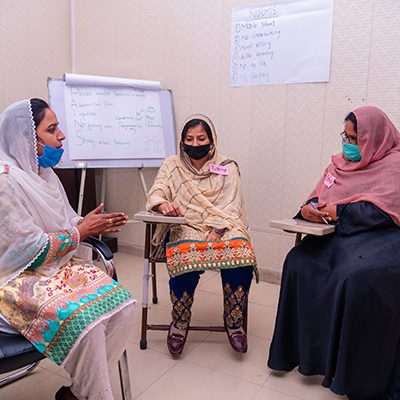
Tackling structural inequities: Major data and systems gaps continue to obscure the full picture of women’s health needs and the barriers they face. Too often, health data is collected and analyzed without a gender lens, masking inequities in access, quality, and outcomes. Few countries routinely disaggregate data by sex, age, or other social determinants, and even fewer measure aspects of care that reflect women’s lived experiences—such as respect, autonomy, and decision-making power. Countries primarily report national level metrics on women’s health which do not provide insights into sub-national disparities in population growth, deliveries at home and in health facilities, and uptake of skilled care and family planning services – all of which are essential to addressing community-level needs. To ensure that a woman accepts and uses a modern contraceptive method in a rural community, her preferences and health seeking behavior patterns need to be understood. These insights can inform the design of data-driven programs and policies—for example, guiding health workers on when and how to counsel women and their families about family planning within their communities.
These data blind spots make it difficult to design policies and allocate resources that respond to women’s realities. Closing them will require investing in gender-responsive monitoring systems, strengthening national data capacity, and embedding women’s voices in the design and evaluation of care.
Investing and supporting the health workforce: Ensuring enough trained, fairly paid, and supported midwives, nurses, and community health workers is essential to achieving woman-centered care. In particular, midwives are educated to uphold women’s rights and autonomy—providing comprehensive, rights-based care across the life course. They empower women and gender-diverse people to make informed decisions about their health, fertility, and family life, enabling them to thrive in education, work, and society. In rural and low-resource communities, midwives are often the first and only point of access to life-saving care; they live and serve in their communities and are highly trusted by women and their families.ix In short, midwives are a linchpin for women-centered care, gender equality, and sustainable development.
Women deliver most health services, yet men dominate decision-making across ministries, hospitals, and global health institutions. This imbalance skews priorities and policies, often sidelining sexual and reproductive health and rights. When women lead, health outcomes improve. Women decision-makers bring lived experience of the barriers to care and are better equipped to advance policies that ensure skilled birth attendance, prevent gender-based violence, and strengthen women’s agency. Empowering women as providers and leaders ensures healthier women, families, and communities.
Increasing male engagement: Equally vital is engaging men as beneficiaries of respectful, equitable care. When men understand and support women’s health journeys, the impact extends beyond maternal outcomes to family well-being, shared decision-making, and community health. Programs that invite men into dialogue are redefining masculinity around care and responsibility rather than control. For example, in Equimundo’s recent State of Men Report, 87% of mothers and 85% of fathers think that taking paid care leave will benefit their partners and their children. Evidence shows that male involvement leads to higher uptake of maternal and reproductive health services, more equitable decision-making improved birth preparedness, and better maternal–newborn outcomes.x In Uganda, the “Responsible, Engaged, and Loving (REAL) Fathers” initiative has successfully engaged male “gender champions” to mentor other fathers—promoting positive masculinity, strengthening father involvement, and reducing violence.xi
Safeguarding rights and autonomy: Across the globe, women’s health and autonomy face renewed threats from anti-rights movements seeking to roll back hard-won gains. In this challenging landscape, it is vital to reaffirm our collective commitment to protecting the health and rights of women and girls to make informed choices about their bodies and their futures. Women’s voices are essential in this fight—when women participate equally in decision-making, policies are more inclusive, effective, and sustainable. By listening to and centering women’s voices, and by highlighting how anti-rights rollbacks threaten abortion rights, contraceptive access, and women’s agency, we can underscore the urgent need for collective action to protect and advance women’s health and autonomy.
Achieving woman-centered care is not just a moral imperative—it’s a practical one. The path forward is clear: listen to women, trust their voices, and build systems that respect their rights and agency. Health systems that respect women’s rights, continuity of care, and gender equality deliver better outcomes for everyone. The world cannot afford to delay; centering women today means securing healthier, fairer societies tomorrow.
________________________________________________________________
i In this context, “women” refers to anyone who self-identifies as a woman or has lived experience as a woman. We recognize, respect, and celebrate the gender diversity within this community.
ii World Health Organization. (2023, May 9). Global progress in tackling maternal and newborn deaths stalls since 2015: UN. https://www.who.int/news/item/09-05-2023-global-progress-in-tackling-maternal-and-newborn-deaths-stalls-since-2015--un
iii United Nations Population Fund (UNFPA). (2022). State of World Population 2022: Seeing the Unseen—The Case for Action in the Neglected Crisis of Unintended Pregnancy. New York: UNFPA. Available at https://www.unfpa.org/swp2022
iv https://equityhealthj.biomedcentral.com/articles/10.1186/s12939-019-1048-5
v Minckas, N., Gram, L., Smith, C., & Mannell, J. (2021). Disrespect and abuse as a predictor of postnatal care utilisation and maternal-newborn well-being: A mixed-methods systematic review. BMJ Global Health, 6(4), e004698. https://doi.org/10.1136/bmjgh-2020-004698
vi Renfrew, M. J., McFadden, A., Bastos, M. H., Campbell, J., Channon, A. A., Cheung, N. F., … Midwifery Expert Committee of the Maternal and Child Health Association of China (2014). Midwifery and quality care: Findings from a new evidence-informed framework for maternal and newborn care. The Lancet, 384(9948), 1129-1145. https://doi.org/10.1016/S0140-6736(14)60789-3
vii Van Rompaey, B., Swinnen, E., Dilles, T., & Beeckman, K. (2019). The effects of continuity of care on the health of mother and child in the postnatal period: a systematic review. European Journal of Public Health, 30(4), 749-760. https://doi.org/10.1093/eurpub/ckz082
viii Cheng, Y., Xu, J., Wang, Z., & Li, R. (2023). Effectiveness of a continuum of care in maternal health services on the outcome of women and newborns: A systematic review and meta-analysis. The Lancet Regional Health – Western Pacific, 43, 100962. https://doi.org/10.1016/j.lanwpc.2023.100962
ix International Confederation of Midwives. The Role of Midwives in Humanitarian Crises [Internet]. International Confederation of Midwives; 2024. Available from: https://internationalmidwives.org/resources/role-ofthe-midwife-in-disaster-emergency-preparedness/
x van der Gaag, N., Gupta, T., Heilman, B., Barker, G., & van den Berg, W. (2023). State of the World’s Fathers 2023: Centering Care in a World in Crisis. Washington, DC: Equimundo: Center for Masculinities and Social Justice. Available at https://www.equimundo.org/wp-content/uploads/2023/07/State-of-the-Worlds-Fathers-2023.pdf
xi Tokhi, M., Comrie-Thomson, L., Davis, J., Portela, A., Chersich, M. & Luchters, S. (2018). Involving men to improve maternal and newborn health: A systematic review of the effectiveness of interventions. PLOS ONE, 13(1), e0191620. https://doi.org/10.1371/journal.pone.0191620


